Excessive current causes the Pogo pin to burn out
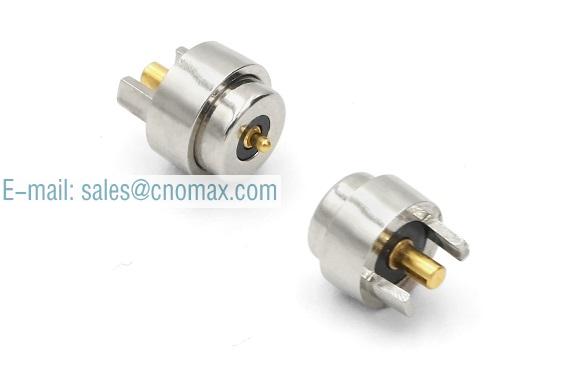
When subjected to excessive current (beyond their rated capacity), these compact components face a high risk of burning out, leading to sudden device failure, permanent damage, or even safety hazards like short circuits or fires. This article explores why excessive current triggers Pogo pin burnout, the mechanisms behind the damage, common root causes of overcurrent events, and actionable strategies to prevent such failures.
At its core,
Pogo pin burnout from excessive current stems from
Joule heating—the phenomenon where electrical energy is converted into heat as current flows through a conductor with resistance. The relationship between current, resistance, and heat is defined by Joule’s Law:
Q = I²Rt, where
Q is the heat generated,
I is the current,
R is the contact resistance of the Pogo pin, and
t is the time the current flows.
Pogo pins are designed with two critical current ratings:
-
Continuous current rating: The maximum current the pin can safely carry indefinitely without overheating (e.g., 1A for consumer charging pins, 5A for high-power automotive applications).
-
Surge current rating: The short-term (millisecond to second) current the pin can tolerate during transient events (e.g., power-on spikes), typically 2–3x the continuous rating.
When current exceeds these limits, three cascading effects lead to burnout:
Pogo pins are small (typically 0.5–3mm in diameter) and made of materials with limited heat dissipation capacity (e.g., brass plungers, copper-alloy barrels, and thin insulation layers). Excessive current generates heat faster than the pin can dissipate it, causing temperatures to spike. For example, a Pogo pin rated for 1A with 50mΩ contact resistance generates 0.05W of heat under normal use (Q = 1² × 0.05 = 0.05W). If current jumps to 5A, heat generation skyrockets to 1.25W (Q = 5² × 0.05 = 1.25W)—a 25x increase.
Most Pogo pin materials (e.g., brass, nickel plating) have a maximum safe operating temperature of 120–150°C. When temperatures exceed this threshold:
-
The spring (often made of stainless steel or piano wire) loses elasticity, leading to poor contact and even higher resistance (a "positive feedback loop" that generates more heat).
-
Insulation materials (e.g., LCP, PBT plastics used in pin housings) melt or char, exposing metal components and increasing short-circuit risk.
-
Plating layers (e.g., gold, nickel) degrade or peel, further raising contact resistance and accelerating heat buildup.
At extreme temperatures (exceeding 900°C for brass, the most common Pogo pin base material), the pin’s metal components begin to melt. The narrowest parts of the Pogo pin—such as the plunger tip (where contact occurs) or the barrel’s soldered joint to the PCB—are most vulnerable. These areas have higher current density (current per unit area), so they heat up faster than thicker sections.
For instance, a Pogo pin with a 0.3mm-diameter plunger tip has a cross-sectional area of ~0.07mm². At 5A, current density reaches ~71A/mm²—far above the safe limit for brass (typically 10–15A/mm²). This extreme current density causes the plunger tip to melt, forming a rough, irregular surface that disrupts contact. In severe cases, molten metal can bridge adjacent Pogo pins, creating a short circuit that spreads damage to other components (e.g., PCBs, capacitors).
Heat from excessive current accelerates oxidation of the Pogo pin’s metal surfaces. Even corrosion-resistant platings (e.g., gold, nickel) break down at high temperatures, exposing the underlying brass or copper. These base metals react rapidly with oxygen in the air to form thick, insulating oxide layers (e.g., copper oxide, brass oxide).
Unlike the thin, stable oxide layer on nickel, these high-temperature oxides have very high resistance (100–1000x that of the base metal). This further increases contact resistance, amplifying Joule heating and creating a cycle of worsening damage. Once an oxide layer forms, even if current returns to normal levels, the Pogo pin will continue to overheat due to the elevated resistance—making burnout irreversible.
Excessive current rarely occurs randomly; it is almost always linked to design flaws, application errors, or external system failures. Below are the most frequent triggers:
The most preventable cause of overcurrent is selecting a Pogo pin
magnetic connector with a current rating lower than the application’s actual needs. For example:
-
Using a 1A-rated Pogo pin in a 3A wireless charger: The charger’s power delivery system supplies 3A to fast-charge a device, but the underrated pin cannot handle the current, leading to rapid burnout.
-
Specifying a low-surge pin for a power-on transient application: Industrial sensors often experience 2–3A surge currents when powered on. If the Pogo pin’s surge rating is only 1.5A, the transient current will exceed limits and cause heat damage.
This issue arises when engineers prioritize cost (lower-rated pins are cheaper) over performance or rely on generic "one-size-fits-all" pin selections without calculating actual current demands.
A short circuit in the device (e.g., between the Pogo pin and a ground wire, or between two adjacent pins) creates a low-resistance path that draws massive current. Common causes of short circuits include:
-
Solder bridges: During PCB assembly, excess solder may connect two Pogo pin pads, creating a short. When power is applied, current bypasses the intended circuit and floods the pins.
-
Damaged insulation: The plastic housing of a Pogo pin may crack (due to vibration or impact), exposing metal components. If the exposed metal touches another conductor, a short circuit occurs.
-
Contamination: Dust, metal filings, or liquid (e.g., spilled coffee on a smartphone) can bridge adjacent Pogo pins, creating a conductive path that causes overcurrent.
For example, a smartphone’s charging port may accumulate lint over time. If the lint contains metal fibers, it can short the Pogo pins in the port, leading to a sudden current spike that burns out the pins.
Pogo pins rely on the system’s power supply (e.g., AC adapters, automotive batteries) to deliver stable current. If the power supply malfunctions or the voltage regulator fails, it can output excessive current to the Pogo pin:
-
A defective phone charger: A faulty AC adapter may stop regulating voltage, supplying 12V instead of the intended 5V to the Pogo pin-based charging port. Per Ohm’s Law (I = V/R), higher voltage increases current—even if resistance remains the same.
-
Automotive battery voltage spikes: When a car’s alternator fails, it can generate voltage spikes (up to 18V instead of the normal 12V) that force excessive current through Pogo pins in the ECU or ADAS sensors.
Poorly installed Pogo pins can create "high-resistance contact points" that trigger localized overcurrent. For example:
-
Bent plunger: If the Pogo pin’s plunger is bent during assembly, it makes partial contact with the mating pad (e.g., only 10% of the intended surface area). The reduced contact area increases current density (even if total current is normal), leading to localized heating and burnout.
-
Loose soldered joint: A weak solder connection between the Pogo pin and PCB increases resistance at the joint. To maintain the required power (P = VI), the system draws more current to compensate—exceeding the pin’s rating.
Preventing overcurrent-related burnout requires a combination of careful design, quality control, and system-level protection. Below are actionable strategies:
The first step is to calculate the Pogo pin’s required current capacity and select a component that exceeds it (to account for transients). Follow these steps:
-
Calculate continuous current: Use I = P/V (current = power/voltage) to determine the steady-state current. For a 10W wireless charger operating at 5V, continuous current is 2A—select a pin with a continuous rating of at least 2A (preferably 2.5A to add a safety margin).
-
Account for surge currents: Consult the application’s datasheet to identify transient current peaks. If power-on surges reach 3A, choose a pin with a surge rating of 3.5–4A.
-
Prioritize high-current designs: For high-power applications (e.g., 5A+), select Pogo pins with larger cross-sectional areas (thicker plungers/barrels) or enhanced heat dissipation features (e.g., copper cores instead of brass).
Add overcurrent protection to the circuit to limit current before it reaches the Pogo pin. Common OCPDs include:
-
Polyfuses (resettable fuses): These devices increase resistance sharply when current exceeds a threshold, reducing current flow. They reset automatically once the fault is fixed, making them ideal for consumer electronics.
-
Fast-blow fuses: For critical applications (e.g., automotive safety systems), fast-blow fuses break the circuit within milliseconds of overcurrent, preventing heat damage to Pogo pins.
-
Current-limiting ICs: These chips actively regulate current, ensuring it never exceeds the Pogo pin’s rating—even during surges or short circuits.
For example, a wireless charger with a 2A Pogo pin can include a 2.2A polyfuse in series with the pin. If current spikes to 3A, the polyfuse triggers, limiting current to a safe level and protecting the pin.
Reduce installation-related overcurrent risks with strict manufacturing standards:
-
Automated assembly: Use robotic soldering and placement equipment to avoid solder bridges and ensure proper Pogo pin alignment.
-
Post-assembly testing: Conduct continuity and insulation resistance tests on every Pogo pin to detect short circuits or weak connections before the device leaves the factory.
-
Protective housing: Use dust- and water-resistant housings (e.g., IP67-rated) for Pogo pins in harsh environments to prevent contamination-related shorts.
For high-reliability applications (e.g., medical devices, automotive ECUs), add temperature sensors near Pogo pins. These sensors can:
-
Trigger an alert if the pin’s temperature exceeds 120°C (the safe limit for most materials).
-
Reduce current or shut down the system temporarily to prevent overheating.
For example, an industrial sensor module could use a thermistor adjacent to its Pogo pins. If the thermistor detects a temperature spike to 160°C, the module’s microcontroller reduces current to 50% of the rated level until the pin cools down.
Early detection of overcurrent stress can prevent complete burnout and device failure. Watch for these warning signs:
-
Increased temperature: The Pogo pin or its surrounding area feels hot to the touch (normal operating temperature is close to ambient; excessive heat indicates Joule heating).
-
Intermittent contact: The device (e.g., a smartphone) charges on and off, or a sensor sends inconsistent data—this occurs when heat weakens the spring, reducing contact pressure and increasing resistance.
-
Visible damage: Discoloration (black/brown spots) on the Pogo pin or its housing, melted plastic, or peeling plating—these are clear indicators of heat damage.
-
Increased voltage drop: Measuring the voltage across the Pogo pin (using a multimeter) reveals a drop of >100mV at rated current—this signals elevated resistance from heat or oxidation.
Excessive current is a leading cause of Pogo pin burnout, driven by Joule heating, metal degradation, and accelerated oxidation. While the damage is often irreversible, it is highly preventable through careful component selection (matching current ratings), system-level protection (OCPDs), and rigorous quality control. By understanding the mechanisms of overcurrent damage and addressing root causes—such as mismatched ratings, short circuits, or faulty power supplies—engineers can ensure Pogo pins deliver reliable performance throughout their intended lifespan, avoiding costly device failures and safety risks.

 WhatsApp:+8613652508770